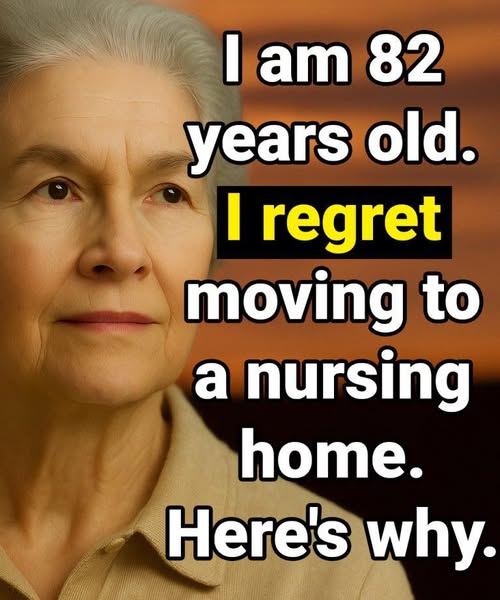
Why I Regret Moving to a Nursing Home: 6 Hard Truths You Need to Know
For many seniors, the transition to a nursing home is sold as a “recipe” for a worry-free life—no more cooking, cleaning, or managing medications alone. However, after moving in at age 82, many residents discover that the reality is far more complex.
While these facilities provide essential medical support, there are deep emotional and social costs that are rarely discussed in the brochures. Here are six hard truths about the transition to long-term care.
1. The Loss of Autonomy
The most immediate shock is the loss of a self-directed life. In a nursing home, your schedule is no longer your own.
The Routine: Wake-up times, meals, and even hygiene schedules are dictated by facility staffing needs rather than your personal preference.
The Impact: This shift can lead to a feeling of “learned helplessness,” where the spark of independence begins to fade.
2. Institutional Loneliness
Ironically, being surrounded by people 24/7 can be lonelier than living alone.
Surface Connections: While there are other residents, many are dealing with advanced cognitive decline or physical ailments that make deep, meaningful conversation difficult.
The Missing “Village”: You are no longer part of a multi-generational neighborhood. The loss of daily interactions with children, pets, and diverse age groups can feel spiritually draining.
3. The Grief of “Stuff”
Moving to a nursing home usually requires downsizing decades of life into a single room.
The Truth: It isn’t just about furniture; it’s about the memories attached to them. Giving away the dining table where your family spent 40 years of Christmases is a profound form of grief that many aren’t prepared for.
4. The “Observer” Effect
In a nursing home, you often become an observer of your own life rather than an active participant.
Lack of Purpose: Without a kitchen to cook in or a garden to tend, residents often struggle to find a daily “reason to get up”.
Mental Health: This lack of active engagement is a primary “ingredient” in late-life depression.
5. Staffing Realities
Even in the best facilities, the “recipe” for care is often hampered by industry-wide staffing shortages.
The Hard Truth: Nurses and aides are often overworked and underpaid. This means that while your medical needs are met, your emotional needs—like a simple five-minute chat—are often sacrificed due to time constraints.
6. The Finality of the Move
There is a psychological weight to knowing that this is likely your “final” home.
The Reflection: For many, the move feels like a surrender. Without the ability to change your environment or “move on” to a new chapter, it can be difficult to maintain an optimistic outlook on the future.
A Lesson for Families
Before making the move, it is vital to weigh physical safety against emotional well-being. If possible, explore “Aging in Place” options or smaller, community-based “Green House” models that prioritize resident agency.
