The Surprising Reason Some Window Grilles Are Angled Downwards
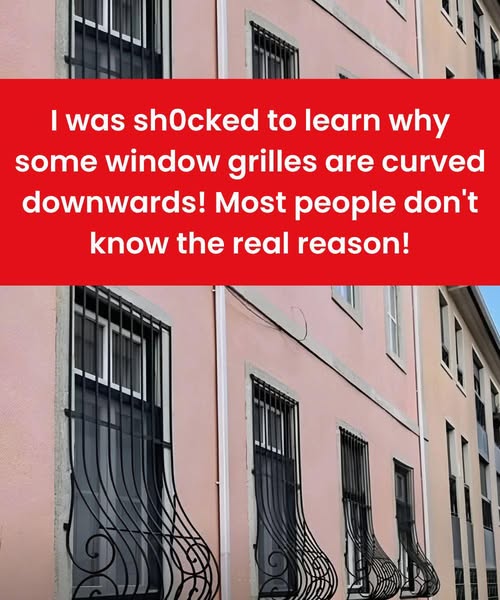
If you have ever walked through historic European neighborhoods or older city centers, you may have noticed a curious architectural “recipe”: iron window grilles that don’t just sit flat against the glass, but curve or angle sharply downwards and outwards at the bottom. While many assume this is a modern anti-theft design, the real reason is a fascinating blend of social history and household practicality.
1. The “Belly” of the Grille: More Than Decoration
These specific grilles are often referred to as “belly grilles” or rejas de panza.
The Flower Pot Theory: One of the most common reasons for the downward curve was to provide a secure “recipe” for outdoor gardening. The angled space allowed residents to set heavy terracotta flower pots outside the window without them falling into the street, bringing light and nature into cramped urban quarters.
Ventilation and Light: By angling the bars outward, architects could install thick security bars without completely blocking the flow of fresh air or sunlight into the lower levels of a home.
2. The Social “Recipe”: Communication and Courting
In many Mediterranean and Latin American cultures, these angled grilles played a vital role in social life.
The Courting Window: Historically, the outward curve allowed young women to sit on the deep windowsill and speak with suitors on the street while still being protected by the safety of the iron bars.
Street Observation: The “belly” of the grille allowed residents to lean their heads out further to see what was happening up and down the street, functioning much like a modern-day security camera or a balcony for homes that couldn’t afford a full terrace.
3. Practical Maintenance: The “Drip” Effect
Beyond social reasons, there is a technical “recipe” for why the grilles angle downwards: water management.
Protecting the Facade: When iron grilles are flush against a building, rainwater can collect and run down the stone or plaster, causing unsightly rust stains.
The Angle: By curving the bars downward and away from the window sill, gravity ensures that water drips directly onto the pavement below rather than soaking into the window frame or the building’s exterior walls.
Quick Reference Summary
| Feature | Primary Purpose |
| Outward Curve | Creates a shelf for flower pots or a space to lean out. |
| Downward Angle | Directs rainwater away from the building to prevent rust and rot. |
| Historical Use | Facilitated “window-side” social interactions in dense cities. |
| Security | Provides safety without the “cage-like” feel of flat bars. |
Conclusion
The next time you see these uniquely shaped grilles, you’ll know they aren’t just an artistic choice. They are a clever architectural “recipe” designed to maximize space, protect the home from the elements, and keep the residents connected to the world outside their windows.
