Why My Grandmother Always Sticks a Clove into an Onion: The Secret “Onion Piqué”
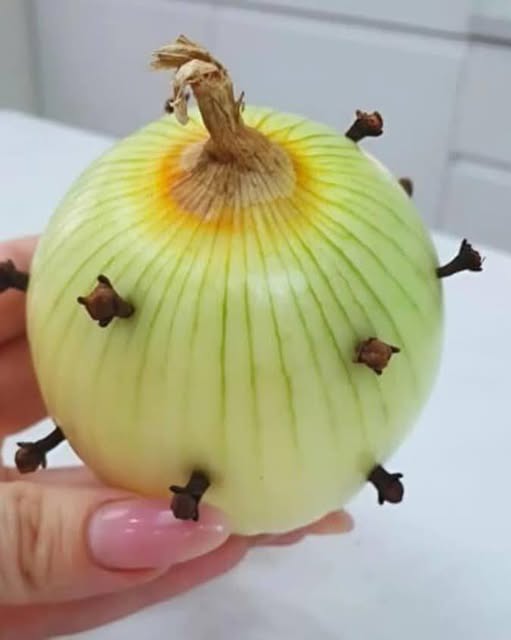
If you’ve ever watched an old-school cook or a professional chef prepare a stock, you might have noticed a strange sight: a peeled white onion with several whole cloves pinned into its sides. It looks like a miniature medieval mace or a piece of kitchen art.
In French culinary tradition, this is known as an Oignon Piqué (Pricked Onion). My grandmother didn’t know the French term, but she knew the results. Once she explained the “why” behind this trick, I realized it was the missing link to restaurant-quality flavor in my own kitchen.
The Secret: Why the Clove Meets the Onion
The combination isn’t just for show. It’s a functional tool that handles two of the biggest challenges in slow-cooking: infusion and recovery.
1. Controlled Flavor Infusion
Cloves are incredibly powerful. If you drop a few loose cloves into a soup, they can settle in a corner and create “flavor hot spots,” or worse, you might accidentally bite into one later (an experience that is bitter and numbing). By pinning them into the onion, the cloves stay suspended in the liquid, releasing their warm, aromatic oils evenly as the onion softens.
2. The “No-Search” Recovery
Nothing ruins a smooth Velouté or a bowl of stew like a hidden whole clove or a stray onion peel. The Oignon Piqué acts as a flavor anchor. When the cooking is finished, you simply lift the onion out with a slotted spoon, and all the cloves come out with it. No fishing, no straining, no surprises.
How to Make an Oignon Piqué
You only need three things and about 30 seconds:
One medium onion (Yellow or white works best; remove the papery skin).
2–4 whole cloves.
1 bay leaf (Optional: pin the leaf to the onion using the cloves for the “Grandmother Special”).
The Process:
Peel the onion but leave the root end intact so it doesn’t fall apart.
Press the sharp stem of the clove directly into the flesh of the onion.
If using a bay leaf, lay the leaf against the onion and “nail” it in place by pushing the cloves through the leaf and into the onion.
Where to Use This Trick
| Dish Type | Why It Works |
| Bechamel Sauce | It provides the classic “warm” undertone to white sauces without changing the color. |
| Beef Stew | The cloves cut through the richness of the fat, adding a subtle complexity. |
| Chicken Stock | It removes the “flat” taste of boiled water, giving the broth a professional “gold” flavor. |
| Rice Pudding | Simmering an onion piqué in the milk (yes, really!) creates a sophisticated, savory-sweet balance. |
The “Grandmother” Result
When you use this trick, your guests won’t be able to pin down exactly why your soup tastes better than theirs. They’ll taste a “depth” that wasn’t there before. The onion provides the sweetness and base, while the clove provides the “spike” of aroma that awakens the palate.
Pro-Tip: If you are making a clear broth, use a white onion. Yellow onions can sometimes bleed a golden hue into the liquid, which is fine for stews but less ideal for consommé.
[SEE MORE: Check out the first comment for my grandmother’s specific “Sunday Gravy” recipe where the Oignon Piqué is the star of the show!]
