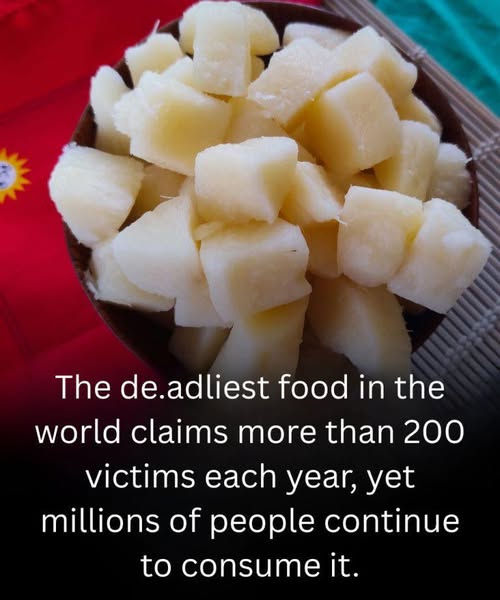
Why You Should Think Twice Before Eating Raw Cassava
While it is a dietary staple for over 800 million people worldwide, cassava (also known as yuca or manioc) is often cited as one of the “deadliest” foods if not prepared with the right “recipe” for safety. Millions continue to consume it because, when handled correctly, it is a versatile and nutritious root vegetable—but eating it raw or under-processed can have fatal consequences.
Here is why your method of preparation is the difference between a healthy meal and a dangerous toxin.
1. The “Deadly” Ingredient: Cyanogenic Glycosides
Cassava contains compounds called cyanogenic glycosides, specifically linamarin.
The Chemical Reaction: When raw cassava is chewed or crushed, an enzyme called linamarase is released, which converts these glycosides into hydrogen cyanide.
The Victim Count: Improperly processed cassava is responsible for more than 200 deaths each year, often occurring in regions facing food shortages where people may bypass long soaking times to eat more quickly.
Chronic Effects: Even if a single meal isn’t fatal, long-term consumption of poorly processed cassava can lead to Konzo, a permanent paralytic disease caused by chronic cyanide exposure.
2. The Safety Recipe: How to Neutralize the Toxin
You don’t have to stop eating cassava, but you must follow a strict preparation “recipe” to ensure the cyanide is removed before it reaches your plate.
Essential Processing Steps
Peeling: The highest concentration of cyanide is found in the skin. Always peel the root deeply to remove the outer brown skin and the thick white layer beneath it.
Soaking: This is the most critical step. Soaking cassava chunks in water for 3 to 6 days allows the cyanogenic compounds to leach out into the water.
Boiling: High-heat cooking further breaks down any remaining toxins. Always boil cassava thoroughly and discard the cooking water immediately; never use it for soups or sauces.
Fermentation: In many cultures, cassava is fermented or dried in the sun, which further reduces the chemical risk to negligible levels.
3. Sweet vs. Bitter Cassava
Not all cassava carries the same level of risk, but all must be treated with caution.
Sweet Cassava: Contains lower levels of cyanide and is the variety most commonly found in US grocery stores. It still requires peeling and thorough boiling.
Bitter Cassava: Contains much higher levels of toxins and requires extensive soaking, drying, and fermentation to be safe for human consumption.
Quick Reference: Safety Summary
| Action | Purpose |
| Never Eat Raw | Prevents the immediate release of hydrogen cyanide. |
| Deep Peeling | Removes the most toxic parts of the plant. |
| Discard Water | Ensures leached toxins are not re-ingested. |
| Thorough Cooking | Denatures the enzymes that produce the poison. |
Conclusion
Cassava is an incredible source of resistant starch and energy, but it is a food that demands respect. By following the traditional “recipe” of soaking and boiling, you can enjoy this ancient root without falling victim to its hidden chemical defenses.
