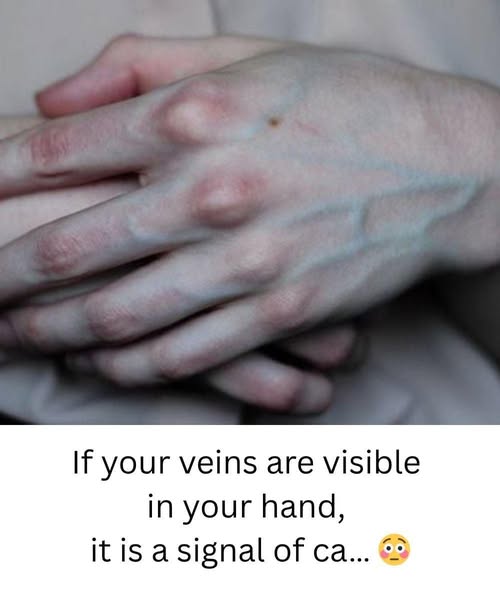
Visible Hand Veins: A Sign of Health or a Cause for Concern?
In most cases, having visible veins in your hands is a normal and harmless part of the human “recipe” for aging, genetics, and lifestyle. While there are many urban myths suggesting they signal specific deficiencies, the clinical reality is usually far more straightforward.
Here is the breakdown of what those prominent veins in your hands are actually trying to tell you.
1. The Ingredients of Visibility
Several natural factors determine how easily you can see the veins in your hands:
Aging and Skin Thinning: As you age, your skin naturally loses collagen and elasticity, making it thinner and less able to conceal the veins beneath it.
Low Body Fat: Individuals with less subcutaneous fat have less “insulation” between their skin and their veins, making them more prominent.
Genetics: If your parents or grandparents had veiny hands, you are likely predisposed to having them as well.
Physical Activity: Regular exercise, particularly strength training, increases blood flow and blood pressure, which can push veins closer to the skin’s surface and make them appear permanently enlarged.
2. Environmental Triggers
Sometimes, your veins only “pop out” under specific conditions:
Heat Exposure: High temperatures cause your veins to dilate as your body attempts to cool itself down.
Hormonal Changes: Life events like pregnancy or menopause can affect blood flow and pressure, making veins more visible.
Stress and Anxiety: Chronic stress can raise your blood pressure, which may lead to temporary stretching and bulging of the veins.
3. When It Is a Medical Signal
While usually cosmetic, there are rare instances where visible veins signal an underlying health issue:
Varicose Veins: Although more common in the legs, twisted and enlarged “varicose” veins can occur in the hands due to weakened valves.
Phlebitis: Inflammation of the veins caused by injury, infection, or an autoimmune disorder can cause them to appear swollen and tender.
Blood Clots: Conditions like Deep Vein Thrombosis (DVT) can cause swelling if a clot thwarts normal blood flow.
Circulation Issues: If veins are accompanied by pain, swelling, or skin discoloration, it may indicate chronic venous insufficiency.
Quick Reference Summary
| Observation | Likely Cause |
| Thin, Blue Webbing | Aging or Low Body Fat. |
| Temporary Bulging | Exercise, Heat, or Stress. |
| Twisted, Painful Veins | Potential Varicose Veins or Phlebitis. |
| Sudden Swelling & Heat | Possible Blood Clot (Seek medical attention). |
Understanding the Signal
If your hand veins are simply visible but not painful, they are likely just a sign of your unique anatomy or the natural passage of time. However, if you notice sudden changes, localized pain, or skin ulcers near the veins, it is important to consult a vascular specialist to rule out serious circulatory problems.
