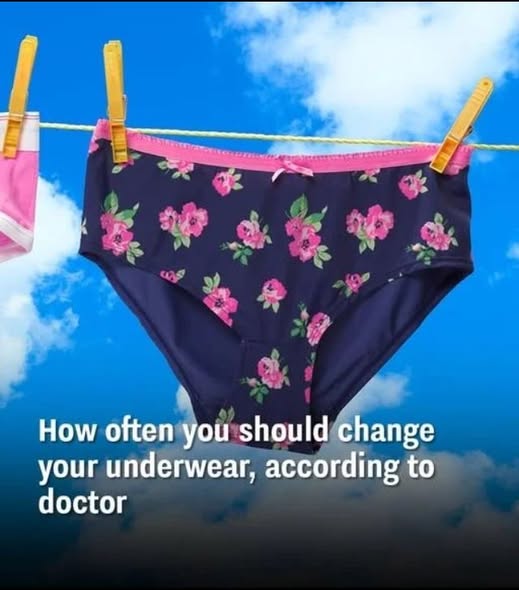
While it may seem like a simple matter of personal hygiene, the question of how often you should change your underwear—and how long you should keep each pair before replacing it—is a topic of long-standing debate among medical professionals.
Here is the “recipe” for maintaining optimal intimate health based on current dermatological and gynecological advice.
1. The Daily Debate: Once or Twice?
The general medical consensus for most people is that underwear should be changed once per day. However, there are “ingredients” that may require you to increase that frequency:
Physical Activity: If you engage in a heavy workout or live in a humid climate, doctors recommend changing immediately after your session to prevent moisture buildup.
Skin Sensitivities: Those prone to yeast infections, urinary tract infections (UTIs), or skin rashes (like intertrigo) may find that changing twice daily helps keep the area dry and bacteria-free.
The Nighttime Rule: Some doctors suggest “going commando” at night to allow the skin to breathe, while others argue that clean, loose-fitting cotton underwear is perfectly safe.
2. The Replacement Recipe: When to Toss Them
A surprising point of debate is how long a pair of underwear should remain in your drawer before it is discarded entirely.
The 6-to-12 Month Rule: Many experts suggest replacing your entire collection every 6 to 12 months.
The “Invisible” Threat: Even with regular washing, old fabric can harbor traces of bacteria like E. coli or various fungi that survive standard laundry cycles.
Fabric Integrity: Once the elastic begins to fray or the fabric thins, the garment loses its ability to provide proper support and moisture-wicking, which are essential for preventing irritation.
3. Best Practices for Washing
How you wash your underwear is just as important as how often you change it. To ensure a “clean slate,” follow these steps:
High Heat: Whenever possible, wash underwear in hot water (at least 140°F) to kill germs and bacteria.
Sensitive Detergents: Use fragrance-free, dye-free detergents to avoid contact dermatitis in sensitive areas.
The Sun Factor: If you dry your clothes on a line, the UV rays from the sun act as a natural disinfectant, further reducing bacterial counts.
Quick Hygiene Summary
| Action | Recommendation |
| Change Frequency | At least once daily; more if sweating. |
| Replacement Cycle | Every 6 to 12 months for optimal hygiene. |
| Fabric Choice | 100% Cotton is preferred for breathability. |
| Washing Method | Hot water and thorough drying. |
