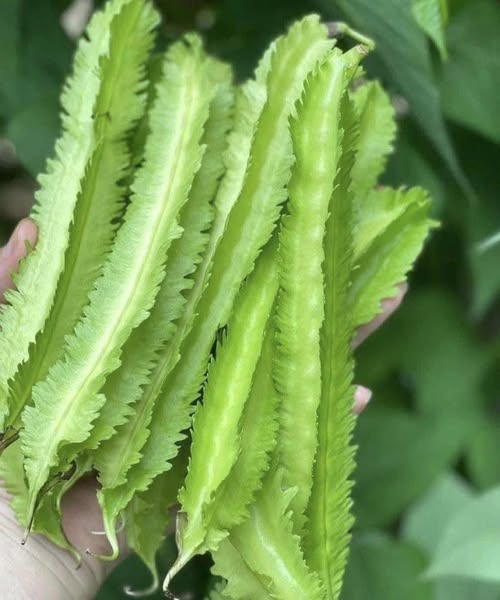
While winged beans are celebrated as a “superfood” because almost every part of the plant—leaves, flowers, tubers, and pods—is edible and nutrient-dense, doctors warn that eating them can cause significant health issues for individuals with certain pre-existing conditions.
If you are planning to add this versatile legume to your diet, here is the essential “recipe” for understanding its benefits and its potential risks.
1. The Risk: Why Doctors Advise Caution
The primary concern doctors have regarding winged beans involves their high concentration of specific compounds that can interfere with certain health conditions.
Oxalic Acid and Kidney Stones: Winged beans contain oxalic acid. For individuals prone to calcium-oxalate kidney stones, consuming high amounts of these beans can facilitate stone formation.
G6PD Deficiency (Favism): Similar to broad beans, winged beans contain substances that can trigger hemolytic anemia in people with G6PD deficiency.
Antinutrients: Raw winged beans contain trypsin inhibitors and hemagglutinins that interfere with digestion. These are typically neutralized by high-heat cooking, but eating them raw can cause severe stomach upset.
2. The Benefits: A Nutritional Powerhouse
For most healthy individuals, the winged bean is a nutritional marvel, often compared to soybeans for its high protein content.
High Protein: The seeds are composed of roughly 30% to 40% protein, making them an excellent meat substitute.
Vitamin Rich: They are loaded with Vitamin A, which supports eye health and immunity, and Vitamin C, a powerful antioxidant.
Mineral Content: They provide significant amounts of iron, copper, and calcium, essential for bone density and blood health.
3. The “Safe Preparation” Recipe
To maximize the benefits of winged beans while minimizing the risk of digestive distress, doctors recommend the following preparation method.
Ingredients
Fresh Winged Beans: Look for bright green, flexible pods without brown spots.
Water: For blanching or boiling.
Healthy Fats: Such as olive oil or coconut milk to aid in the absorption of Vitamin A.
Instructions
Wash and Trim: Rinse the beans thoroughly and trim the stem ends.
The “Kill Step” (Boiling): To neutralize antinutrients like trypsin inhibitors, boil the beans for at least 5 to 10 minutes. Do not eat them raw if you have a sensitive stomach.
Sauté or Steam: Once blanched, you can stir-fry them with garlic and chili or steam them to maintain their Vitamin C content.
Pairing: Serve with a source of Vitamin C (like a squeeze of lime) to increase the bioavailability of the plant-based iron.
Quick Reference Summary
| Feature | Impact on Health |
| Protein Content | Excellent for muscle repair and growth. |
| Oxalates | Risk factor for kidney stones; consult a doctor if prone. |
| Vitamin A & C | Boosts immunity and skin health. |
| Raw Consumption | Can cause indigestion due to antinutrients. |
