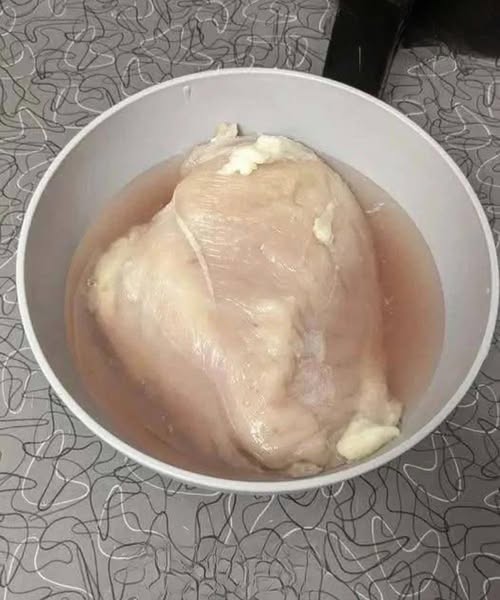
While the decision to throw away food can be difficult, the short answer is no, you should not eat chicken that has been left out overnight.
According to USDA food safety standards, both raw and cooked chicken are considered unsafe if left at room temperature for more than two hours. If the temperature is above 90°F, that window drops to just one hour.
Because children are especially vulnerable to foodborne illnesses, it is best to follow the industry rule: “When in doubt, throw it out”.
The Science of the “Danger Zone”
Bacteria like Salmonella, E. coli, and Staphylococcus aureus multiply most rapidly between 40°F and 140°F.
Exponential Growth: In this “Danger Zone,” bacteria can double every 20 minutes.
Overnight Risk: Over an 8-hour night, bacteria could have doubled 24 times, potentially turning a few cells into millions of pathogens.
Invisible Threat: You cannot always tell if chicken is bad by its appearance, smell, or taste. Harmful levels of toxins can be present even if the meat looks perfectly fine.
Why Reheating Doesn’t Make It Safe
A common misconception is that high heat will “kill off” any problems. While cooking or reheating to 165°F kills active bacteria, it does not always neutralize the toxins they leave behind.
Certain bacteria, like Staphylococcus aureus, produce heat-stable toxins that can survive the microwave or oven.
These toxins are what often cause rapid-onset food poisoning, which can lead to vomiting, diarrhea, and stomach cramps.
Higher Risk for Children
Children are at a significantly higher risk for severe complications from food poisoning because their immune systems are still developing.
Vulnerability: They are more likely to experience dehydration or systemic infections from common foodborne bacteria.
Severe Symptoms: In extreme cases, infections like E. coli can lead to serious conditions such as Hemolytic Uremic Syndrome (kidney failure) in young children.
Proper Storage “Recipe” for Next Time
To ensure your chicken remains safe for the family, follow these standard storage guidelines:
The 2-Hour Rule: Move chicken to the refrigerator within two hours of cooking (or one hour if it’s a hot day).
Cool Fast: Divide large portions into shallow containers so they cool down quickly in the fridge.
Shelf Life: Cooked chicken is safe to eat for 3 to 4 days when stored at 40°F or below.
