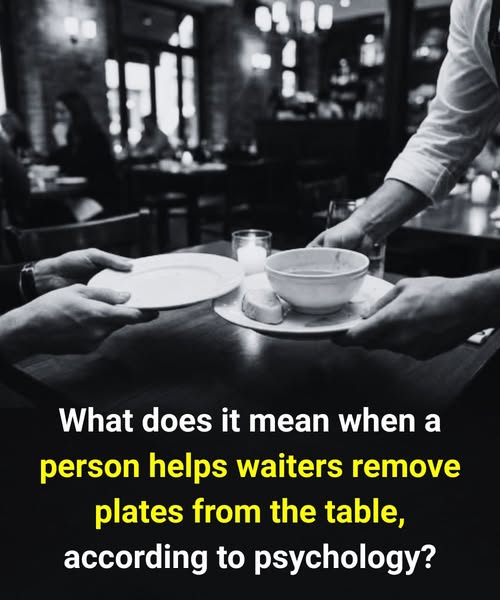
Psychology often looks at small, everyday habits—like stacking your plates at a restaurant—to uncover deeper personality traits. While it may seem like a simple act of politeness, whether you are an introvert or an extrovert can change the motivation behind “helping” the staff. Here is a breakdown of what this common dining habit reveals about your psychological profile.
The Stacking Habit: A Recipe for Decoding Table Manners
Have you ever finished a meal and immediately started organizing the silverware and stacking the plates for the waiter? This “recipe” for social behavior isn’t just about being helpful; it’s a reflection of how your brain processes social environments and empathy.
Prep Time: One Full-Course Meal
Yield: Insights into Your Social Blueprint
The Ingredients (What This Habit Signals)
1. High Agreeableness
In the “Big Five” personality traits, those who clear plates usually score high in agreeableness.
The Psychology: These individuals are naturally cooperative and compassionate. They view the waiter not just as a service provider, but as a peer who might be overwhelmed.
2. High Empathy (The “Mirroring” Effect)
People who help clear plates often have high levels of emotional intelligence.
The Psychology: They “mirror” the stress of the staff. If the restaurant is busy, they feel a physical need to alleviate that pressure to reduce their own vicarious stress.
3. The Need for Control
For some, stacking plates is less about the waiter and more about the environment.
The Psychology: If the table is cluttered, it creates “visual noise.” Stacking the plates is a way to reclaim order in a chaotic public space.
The Method: Introvert vs. Extrovert
While both types might clear the plates, their internal “recipe” is different:
The Introvert’s Motivation: “The Quiet Exit”
For an introvert, helping the waiter is often a way to minimize social interaction.
The Logic: By having the plates ready, the interaction with the waiter becomes faster and more efficient. It reduces the time someone is standing over them, allowing the introvert to return to their “internal world” or private conversation sooner.
The Goal: Efficiency and reduced social friction.
The Extrovert’s Motivation: “The Connection”
For an extrovert, the act is often an opening for engagement.
The Logic: They may stack the plates while making eye contact, offering a smile, or starting a brief conversation. For them, it is a pro-social gesture meant to build a micro-connection with the staff.
The Goal: Recognition and social harmony.
Instructions: Is It Actually Helpful?
Before you start your next “cleaning spree,” consider the “server’s perspective”:
Don’t “Over-Stack”: Professional servers often have a specific “system” for balancing weight on their arms. A tower of mismatched plates can actually be harder (and more dangerous) to carry.
Scrape, Don’t Hide: If you want to be truly helpful, scrape the food scraps onto the top plate so the server doesn’t have to touch your leftovers.
The Silverware Rule: Keep forks and knives on the top plate rather than sandwiching them between layers, where they are likely to slide out.
Chef’s Note on Personality
If you find yourself unable to leave a plate “messy,” you likely possess a strong “Servant Heart”—a psychological archetype that finds fulfillment in small acts of service. Whether you do it to end a social interaction quickly (Introvert) or to brighten someone’s shift (Extrovert), the underlying ingredient is a desire to leave a place better than you found it.
Final Thought:
Next time you’re out to dinner, watch your companions. Those who clear the table are often the most reliable and empathetic people in your life.
