Don’t Get Fooled by the Supermarkets: They’re Selling You Meat From…
We all do it: we stand in the meat aisle, looking at the neatly wrapped packages of bright red ground beef or perfectly pale chicken breasts. We look for words like “Natural,” “Fresh,” or “Farm-Raised.” But if you aren’t looking at the small print, you might be buying meat that has traveled further than you did on your last vacation.
The “big secret” supermarkets don’t want you to notice is the Country of Origin Labeling (COOL) and the reality of “Product of USA” loopholes. Here is the truth behind the plastic wrap and how to ensure you’re getting the quality you pay for.
1. The “Product of USA” Loophole
Until very recently, a law allowed meat to be labeled “Product of USA” even if the animal was raised and slaughtered in another country (like Brazil, Namibia, or Mexico).
The Trick: As long as the meat was repackaged or processed in a US facility, it could claim the US label.
The Reality: You could be eating beef that was frozen, shipped across an ocean, thawed, and then labeled as “domestic.”
2. “Carbon Monoxide” Injections
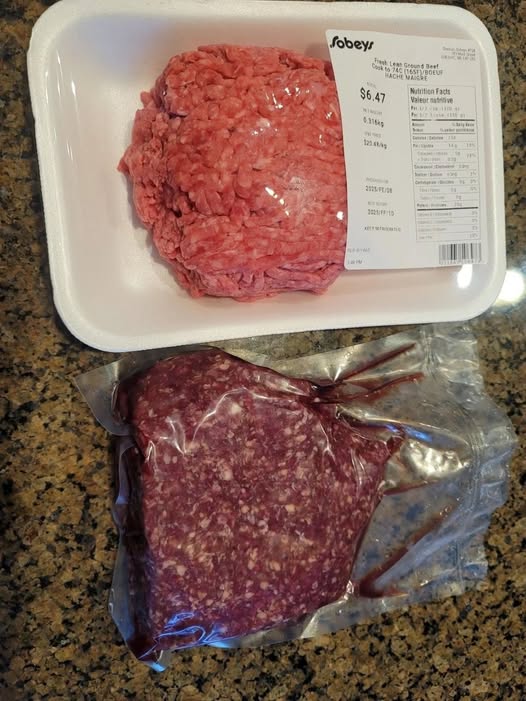
Ever wonder why supermarket meat stays “cherry red” for weeks, while meat from a local butcher turns brownish after a day or two?
The Process: Many large-scale meat packers use Atmospheric Packaging that includes a small amount of carbon monoxide.
The Consequence: This gas “locks” the red color into the meat, preventing it from oxidizing. While the FDA deems it safe, it can fool consumers into thinking meat is much fresher than it actually is.
How to Read the “Hidden” Codes
| Label Term | What They Want You to Think | The Reality |
| “Natural” | It’s organic or hormone-free. | It simply means no artificial ingredients were added after slaughter. |
| “Grass-Fed” | The cow lived on a pasture. | Unless it says “100% Grass-Fed,” the animal was likely “finished” on grain in a feedlot. |
| “No Antibiotics” | The animal was never sick. | It means no antibiotics were in the system at the time of slaughter. |
3. The “Plumping” Secret
If you’ve ever cooked a chicken breast that seemed to shrink to half its size in the pan while releasing a puddle of white liquid, you’ve been “plumped.”
The Method: Supermarkets often sell chicken that has been injected with a saline (saltwater) solution.
The Scam: This can add up to 15% to the weight of the meat. You are literally paying “meat prices” for salt water. Look for the label: “Contains up to 15% chicken broth.”
How to Beat the System: 3 Pro Tips
If you want to stop being “fooled” by industrial meat marketing, follow these steps:
Look for the “Est.” Number: Every package of meat has a small circle with an “Establishment Number.” You can Google this number to see exactly which processing plant the meat came from.
Check the “Pack Date” vs. “Sell By” Date: The “Sell By” date is for the store. The “Pack Date” tells you how long that meat has been sitting in a box.
Buy the “Primal” Cuts: If you buy a whole sub-primal (a large slab of meat) and cut your own steaks, you avoid the additives and surface bacteria introduced during the store’s slicing process.
The Golden Rule: If the meat is a “vibrant, neon red” but the price is suspiciously low, it’s likely been treated for shelf-life, not for flavor. Real, aged beef should be a deep, dark burgundy.
